
Nursing Procedures and Skills
BEST IELTS SPEAKING APP FOR NURSES AND MIDWIVES

IELTS, The International English Language Testing System is the world’s most popular English language proficiency test for higher education and global migration. For nurses and midwives seeking to work in the UK or Ireland, it is mandatory to take the IELTS exams as it is required by the Nursing and Midwifery bodies of both countries.
There are two types of IELTS tests, The General Test and the Academic Test which are all composed of four elements: Listening, Reading, Writing, and Speaking.
IELTS SPEAKING FORMAT
The candidate will talk to a certified examiner in the IELTS Speaking test. The test is interactive and as close to a real-life situation as a test can get. A variety of accents may be used, and the test will be recorded.
The content of the IELTS Speaking test is the same for both the IELTS Academic and IELTS General Training tests. The IELTS Speaking test is designed to assess a wide range of skills.
The examiner will want to see how well you can
- communicate opinions and information on everyday topics and common experiences; to do this you will need to answer a range of questions
- speak at length on a given topic using appropriate language
- organize your ideas coherently
- express and justify your opinions
- analyze, discuss and speculate about issues
Make sure that you relax and talk fluently. You will need to speak naturally.
FORMAT
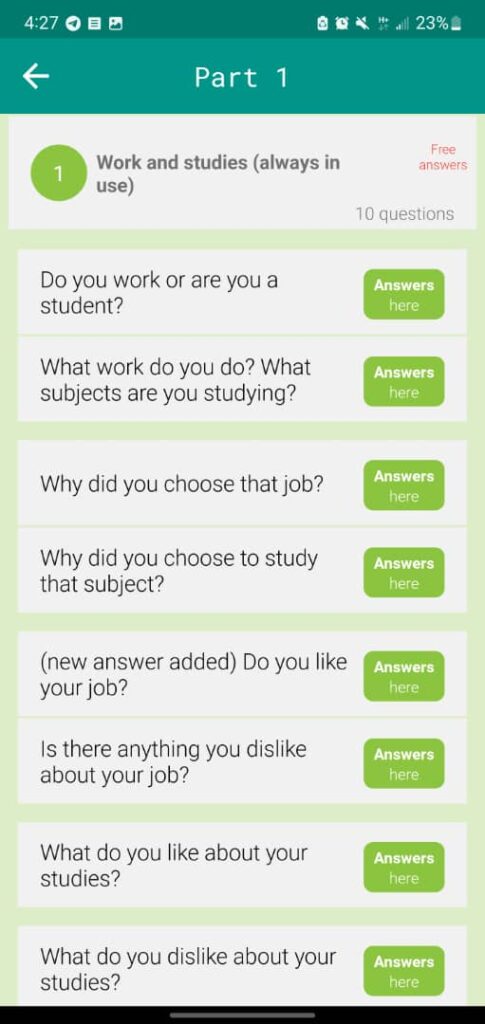
Part 1: The examiner will introduce him or herself and ask you to introduce yourself and confirm your identity. The examiner will ask you general questions on familiar topics, e.g. home, family, work, studies and interests. This section should help you relax and talk naturally.
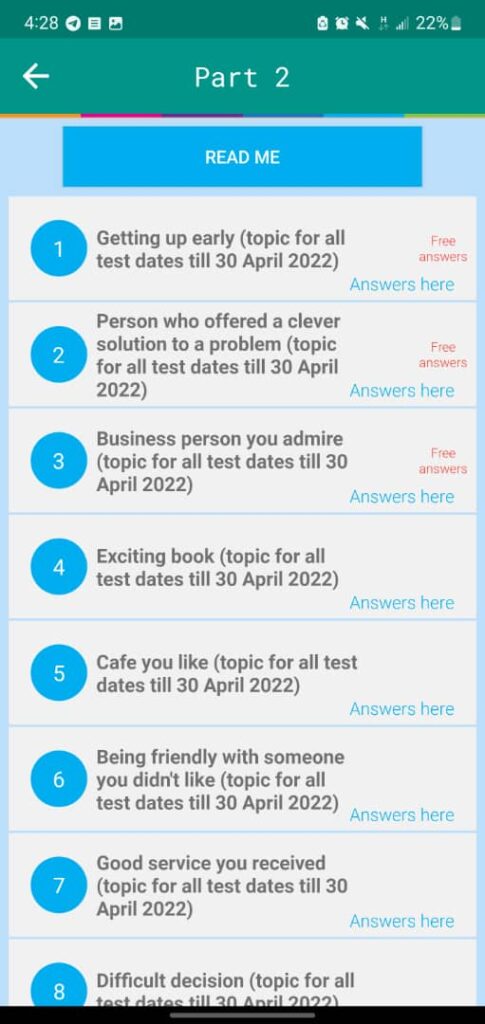
Part 2: The examiner will give you a task card that asks you to talk about a particular topic, including points to include in your talk. You will be given one minute to prepare and make notes. You will then be asked to talk for 1-2 minutes on the topic. You will not be interrupted during this time, so it is important to keep talking. The examiner will then ask you one or two questions on the same topic.
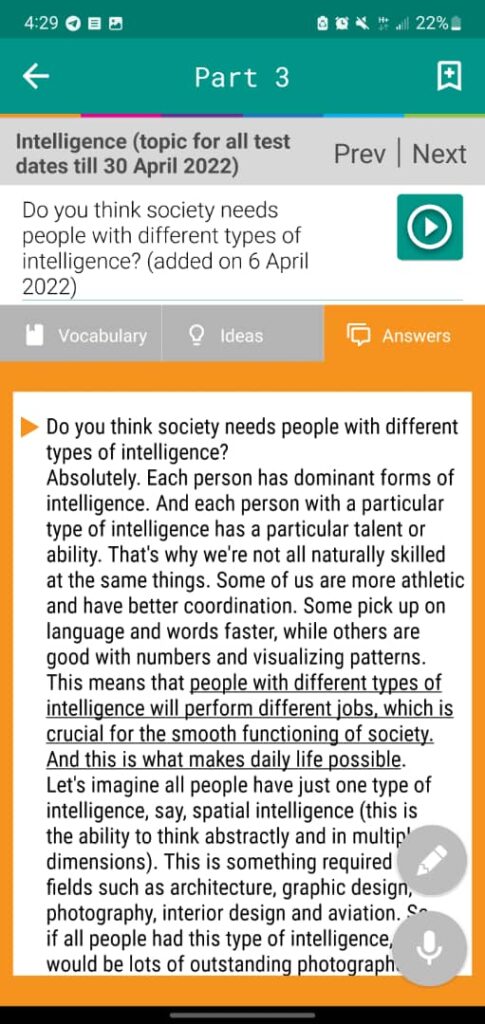
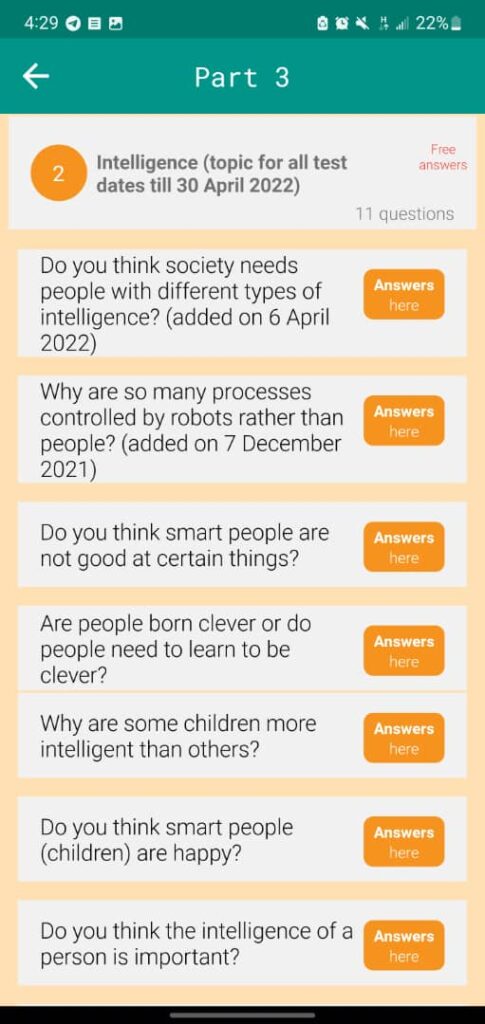
Part 3: The examiner will ask you further questions which are connected to the topic of Part 2. These questions are designed to give you an opportunity to discuss more abstract issues and ideas.
Timing: 11-14 minutes
Marks: You will be assessed on your performance throughout the test by certificated IELTS examiners. You will be marked on the four criteria: fluency and coherence, lexical resource, grammatical range and accuracy, and pronunciation. Scores are reported in whole and half bands.
BEST SPEAKING APP
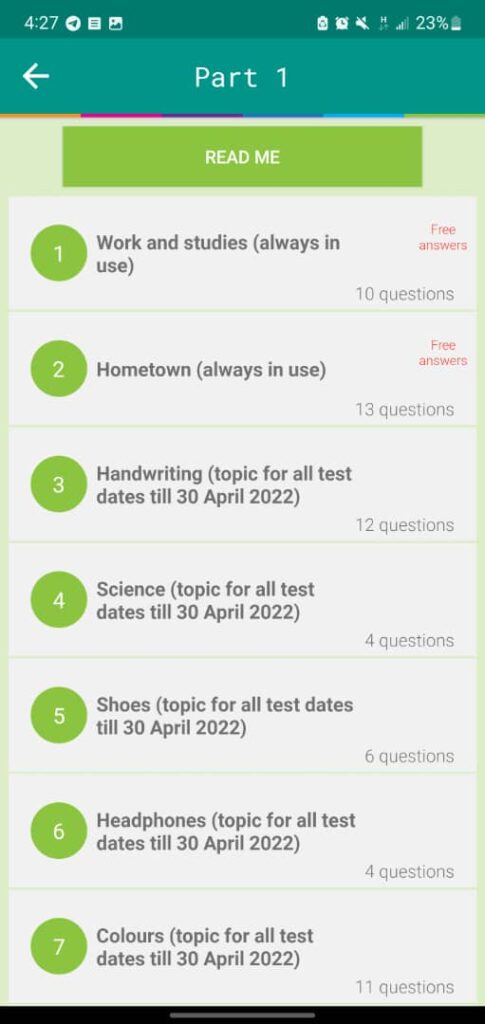
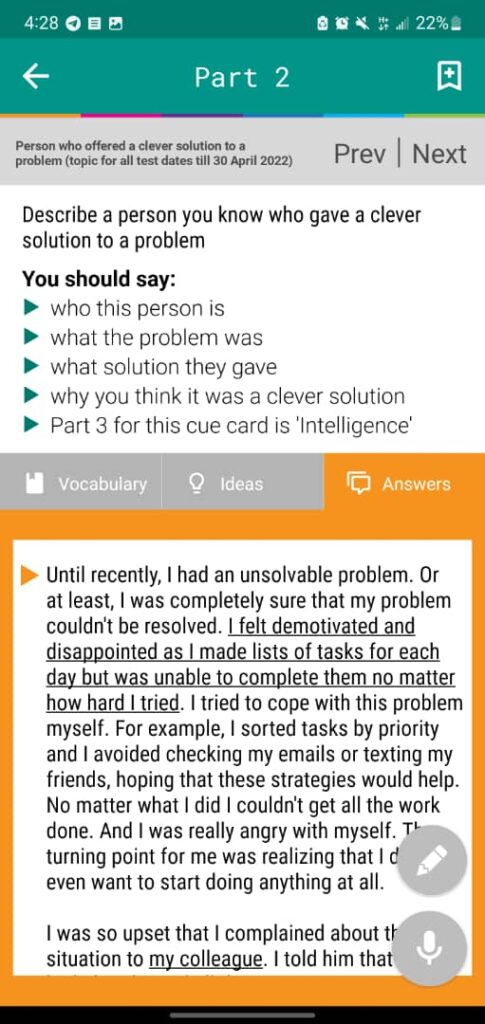
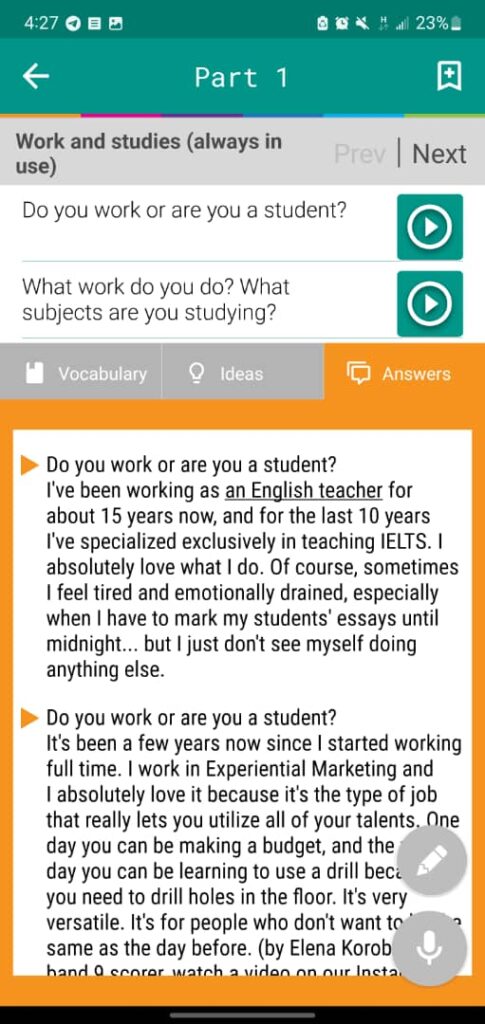
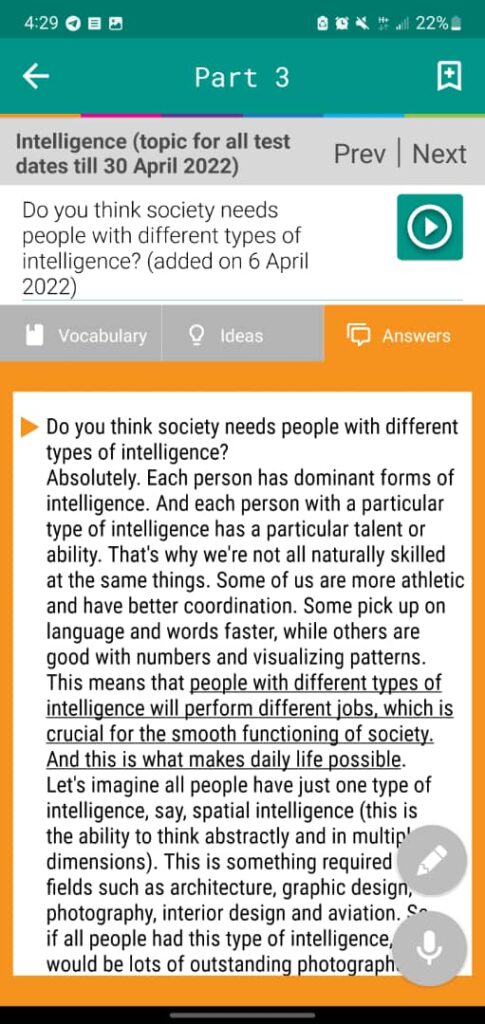
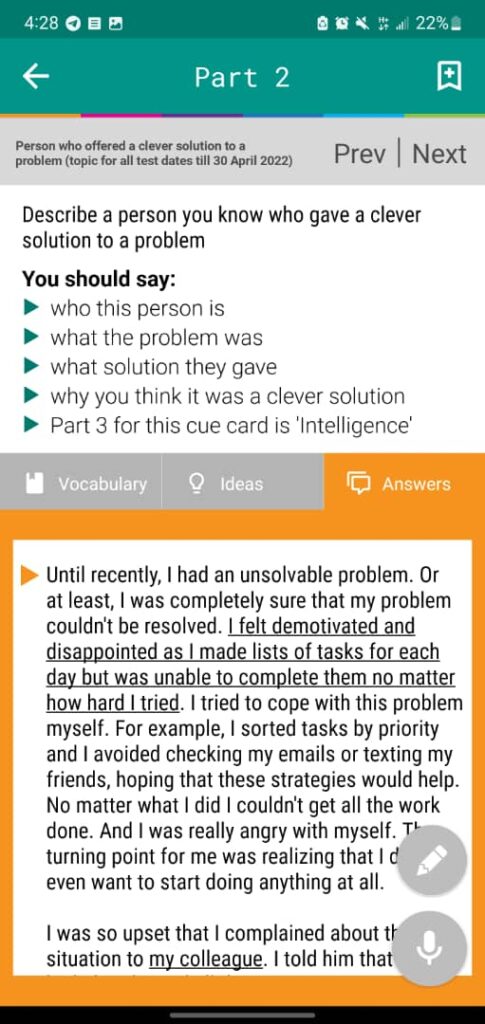
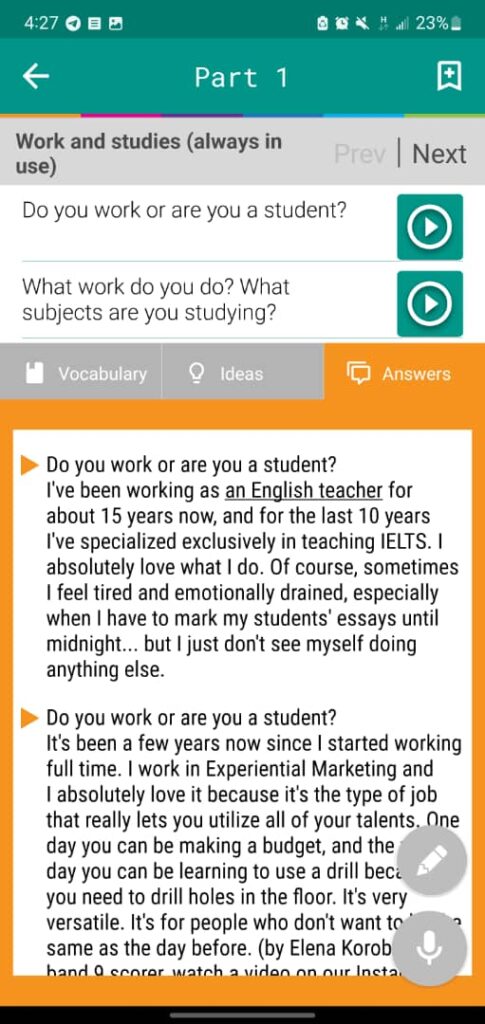
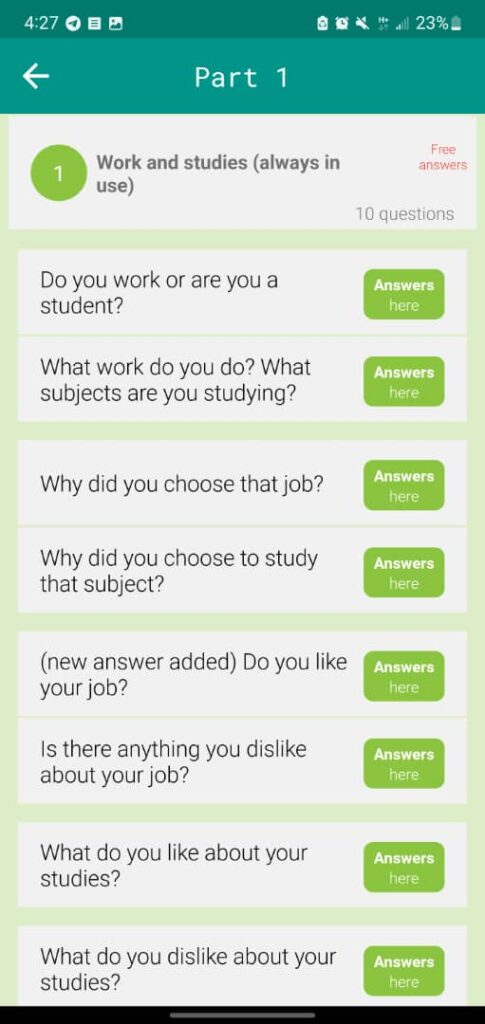
While IELTS speaking is the easiest among the four formats of the examination, one needs to prepare adequately to get the required band score. While there are a lot of materials available only a few provide accurate and reliable resources. So far, the best IELTS app on both Play Store and the App Store is IELTS Speaking Assistant. The app provides sample answers for all three parts of the speaking exam. Even though the app is free, to gain full access, you will have to subscribe to a 1, 3, or 12-month plan.
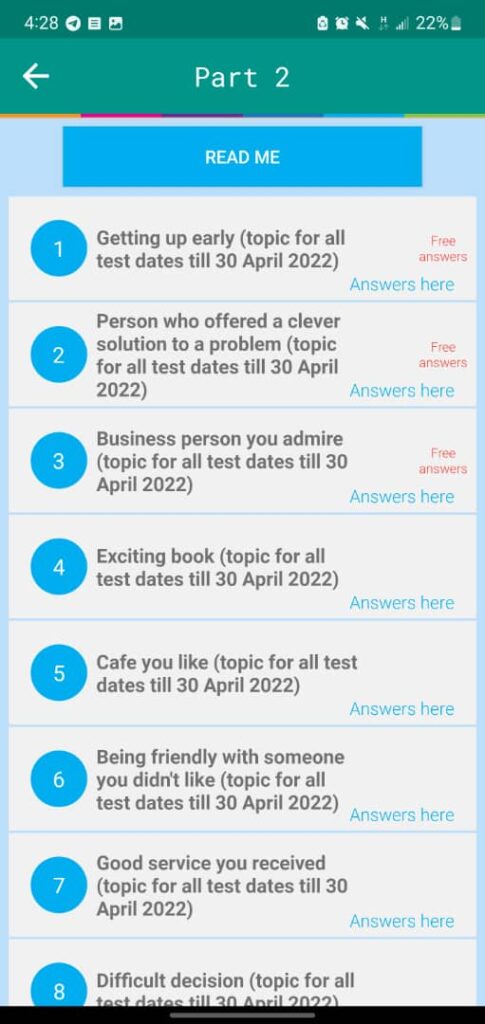
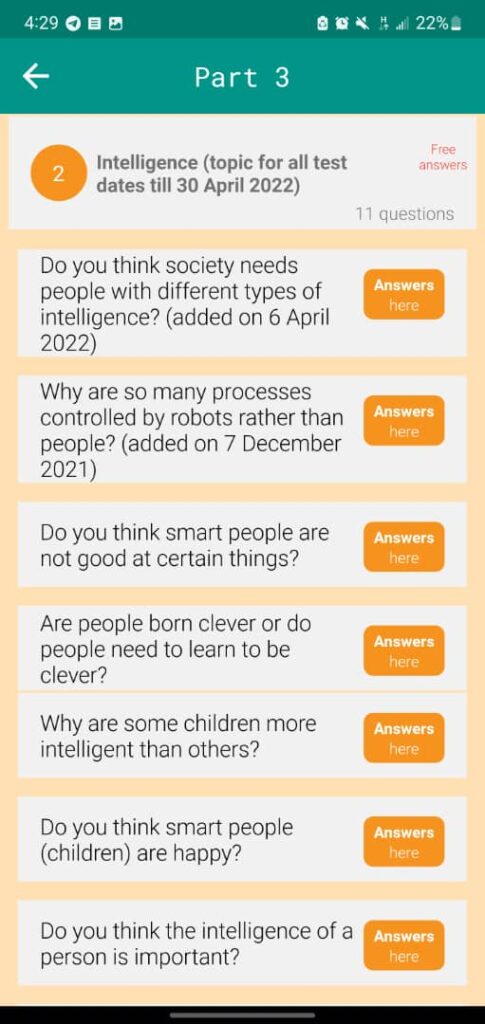
Features
1) A step-by-step guide for effective speaking practice.
2) Real IELTS speaking exam questions
3) Ready-made answers to all the questions
4) A rich collection of ideas that you can use to make relevant and extended answers regardless of your likes and dislikes, habits, cultural differences, and other factors
You can download the app here: IELTS Speaking Assistant
Discover more from Nursing In Ghana
Subscribe to get the latest posts sent to your email.













Nursing Procedures and Skills
Essential Strategies for Dealing with Difficult Patients and Families in Healthcare Settings

As nurses, we sometimes encounter patients and their families who are difficult to work with. These individuals may be demanding, uncooperative, or even hostile. While these situations can be challenging, we must develop strategies to handle them effectively. Here are a few of the approaches to handling difficult patients and relatives:
Understand the Patient’s Background
It is important to understand that difficult behavior may be a result of the patient’s underlying condition, personality, or previous experiences. For example, patients who are in pain, anxious, or feeling vulnerable may be more likely to act out. It is therefore important for the nurse to try to understand the patient’s background and perspective and tailor your approach accordingly.
Be Calm and Stay Objective.
It is essential for the nurse to remain composed and calm when dealing with difficult patients. This will help you maintain control of the situation and prevent it from escalating. It is also important for nurses to remain objective and not take patients’ and relatives’ behavior personally when dealing with their difficult behavior. Try to focus on the patient’s needs and the care that you are providing, rather than getting caught up in their emotional reactions.
Show Empathy
Empathy is one of the essential qualities of a nurse. It is an important skill when dealing with difficult patients and their families. Showing empathy means acknowledging the patient’s feelings and concerns and trying to see the situation from their perspective. The nurse can use phrases like “I understand how you feel” or “I’m sorry you’re going through this” to demonstrate empathy.
Use Effective Communication Techniques
Effective communication is key when dealing with difficult patients and their relatives. Make an effort to listen actively to the patient or family member’s concerns. Use active listening skills, such as repeating back what the patient has said to ensure you have understood their concerns correctly. Using open-ended questions encourages the patient to talk and express their concerns. This will show that you care about their needs and are willing to work with them.
Know When to Seek Help
It’s important to know when to seek help from colleagues or a supervisor. If you are feeling overwhelmed or unable to manage a difficult patient or family member, don’t hesitate to ask for assistance from colleagues or a supervisor.
Involve the Patient in their Care
The patient is at the center of care. Empowering the patient and involving them in their care can help reduce difficult behavior. Encourage the patient to participate in their care plan, and explain the reasoning behind any treatments or interventions. This can help allay the client’s anxiety.
Discover more from Nursing In Ghana
Subscribe to get the latest posts sent to your email.

Effective communication with patients is a crucial aspect of healthcare. It allows healthcare providers to establish trust and rapport with their patients, gather accurate information about their health concerns, and provide effective treatment and follow-up care. In this article, we will discuss some key strategies for effective communication with patients.
First, it is important to establish a warm and welcoming environment for patients. This can be achieved through nonverbal cues such as maintaining eye contact, smiling, and using a friendly tone. It is also important to give patients your undivided attention and to listen actively to what they have to say. This includes using techniques such as rephrasing and clarifying to ensure that you have accurately understood the patient’s concerns.
It is also important to communicate clearly, concisely, and respectfully. This means using simple, easy-to-understand language and avoiding jargon or technical terms that may be confusing to patients. It is also important to be patient and allow the patient to ask questions or express any concerns they may have.
In addition to verbal communication, it is important to consider nonverbal cues as well. This includes maintaining appropriate physical boundaries and using appropriate touch. Nonverbal cues can also be used to show empathy and support, such as by nodding or maintaining a comforting facial expression.
Another important aspect of effective communication with patients is cultural competency. It is important to be sensitive to the cultural and linguistic backgrounds of patients and to take steps to ensure that they feel respected and understood. This may include using interpreters or translation services or simply taking the time to learn about and respect the cultural beliefs and practices of the patient.
Effective communication with patients is not only important for the provision of quality healthcare, but it is also essential for building trust and rapport with patients. By following the strategies outlined above, healthcare providers can improve their communication skills and provide the best possible care for their patients.
Discover more from Nursing In Ghana
Subscribe to get the latest posts sent to your email.
Improving the nurse-patient relationship is essential for providing high-quality healthcare and ensuring positive patient outcomes. A strong nurse-patient relationship can lead to increased trust, improved adherence to treatment plans, and a more positive work environment for nurses. The following are ways for improving the nurse-patient relationship:
Communicate effectively: Effective communication is key to building a strong relationship with patients. This means listening actively to what patients have to say, using clear and straightforward language, and providing information in a way that is easy for patients to understand.
Show empathy: Empathy is the ability to understand and share the feelings of others. By showing empathy, nurses can help patients feel heard and supported, which can improve the relationship and lead to better patient outcomes.
Be respectful: Treating patients respectfully is an important part of building a strong relationship with them. This means showing respect for their autonomy, privacy, and dignity, and treating them as partners in their own care.
Be responsive: Patients may have questions or concerns at any time, and it is important for nurses to be responsive to their needs. This means being available to answer questions and address concerns and making sure patients have the information they need to make informed decisions about their care.
Collaborate with other healthcare providers: Nurses often work with other healthcare providers, such as doctors, therapists, and social workers, to provide comprehensive care for patients. By collaborating with these providers, nurses can ensure that patients receive the best possible care and support.
Involve patients in their care: Involving patients in their own care can help improve the nurse-patient relationship. This means giving patients the opportunity to participate in decision-making and allowing them to express their preferences and concerns.
By implementing these tips, nurses can improve the nurse-patient relationship and provide better care for their patients. A strong nurse-patient relationship can lead to better outcomes and a more positive healthcare experience for everyone involved.
Discover more from Nursing In Ghana
Subscribe to get the latest posts sent to your email.

FUNERAL HELD FOR GHANAIAN MIDWIFE, GRACE BENYIN WHO DIED IN IRELAND

GHANA, GRENADA SIGN NURSE RECRUITMENT DEAL – APPLICATIONS OPEN OCT 24-28, 2025

Scotland NHS Recruiting International Nurses

Ministry of Health Postpones Media Engagement on Unpaid Salaries

NMC Issues Strong Warning to Nurses Against Unprofessional Conduct on Social Media

Government slashes 50% off Nursing Training Fees-Press Release

GRNMA Youth Committee launches 2025 International Youth Day celebration

President Mahama promises UHAS expansion to train more health workers
LIST OF ACCREDITED GOVERNMENT NURSING AND MIDWIFERY TRAINING SCHOOLS IN GHANA

NURSING ADMISSION FORMS ON SALE FOR THE 2023/2024 ACADEMIC YEAR

THE NURSES PLEDGE AND THE MIDWIVE’S PRAYER

NURSING TRAINING ADMISSION INTERVIEW QUESTIONS

GHS INTRODUCES TWO NEW BELT COLOURS FOR TWO NEW LEVELS IN THE NURSING AND MIDWIFERY SERVICE

MOH SUSPENDS THE 2021/2022 ACADEMIC CALENDAR FOR NURSING AND MIDWIFERY SCHOOLS

COMMON TYPES OF INTRAVENOUS (IV) FLUIDS AND THEIR USES

LIST OF PRIVATE NURSING AND MIDWIFERY TRAINING SCHOOLS (ACCREDITED)
-
 Nursing News5 years ago
LIST OF ACCREDITED GOVERNMENT NURSING AND MIDWIFERY TRAINING SCHOOLS IN GHANA
-
 Nursing News3 years ago
NURSING ADMISSION FORMS ON SALE FOR THE 2023/2024 ACADEMIC YEAR
-
 Nursing Procedures and Skills5 years ago
THE NURSES PLEDGE AND THE MIDWIVE’S PRAYER
-
 Nursing Procedures and Skills5 years ago
NURSING TRAINING ADMISSION INTERVIEW QUESTIONS
-
 Nursing News4 years ago
GHS INTRODUCES TWO NEW BELT COLOURS FOR TWO NEW LEVELS IN THE NURSING AND MIDWIFERY SERVICE
-
 Nursing News5 years ago
MOH SUSPENDS THE 2021/2022 ACADEMIC CALENDAR FOR NURSING AND MIDWIFERY SCHOOLS
-
 Notes5 years ago
COMMON TYPES OF INTRAVENOUS (IV) FLUIDS AND THEIR USES
-
 Nursing News5 years ago
LIST OF PRIVATE NURSING AND MIDWIFERY TRAINING SCHOOLS (ACCREDITED)
Vera
December 22, 2022 at 4:34 pm
Please more on clearance form