
Featured
SUICIDE COMMENT IN PARLIAMENT: HARUNA IDDRISU’ DISHONESTY AND JOSEPH OSEI-OWUSU’S SHEER IGNORANCE


The comments by the first deputy speaker of parliament and the minority leader, Haruna Iddrisu and Joseph Osei-Owusu respectively on the floor of parliament in the wake of the debate to decriminalize attempted suicide are very unfortunate.
I had long thought that Haruna Iddrisu, the much-touted walking encyclopedia of Ghana’s parliament was indeed the Einstein until his unfortunate comment or rather a dishonest thought.
Hon. Haruna Iddrisu comment that parliament should not decriminalize attempted suicide and the country should continue to jail persons who attempt to commit suicide to serve as a deterrent to others is a sad one to note. Haruna Iddrisu even made his case unconvincing by citing a scenario where a man hanged himself after having a fight with his sister, saying, people like that cannot be said to have a mental illness. The minority leader ought to be told that mental illness comes in various forms and it is not only those who roam naked on the street.
Over 90% of persons who commit suicide have mental problems in one way or the other underlying their actions. Surprisingly, Hon. Haruna Iddrisu rather sees altruistic suicide as a justifiable act but condemns suicide in depression and stress. He stated, “You do not want to think that when you have depression and distress, the ultimate thing is that you go and take your life since you cannot recover your life back”. In this era of internet buzz, the gentle minority leader could have done himself good by doing a simple search rather than making an unsubstantiated statement.
Is Hon. Huruna Iddrisu oblivion of section 76 (10) of the Mental Health Act, 2012 or the parliament’s walking encyclopedia didn’t revise his notes before the debate? The criminal code section 57(2) of the criminal offences Act, 1960 (act 29) which criminalizes attempted suicide in Ghana is contrary to section 76 (10) of the Mental Health Act (Act 846) which clearly states, “A court may authorize for psychiatric assessment of a person who attempts to commit suicide”.
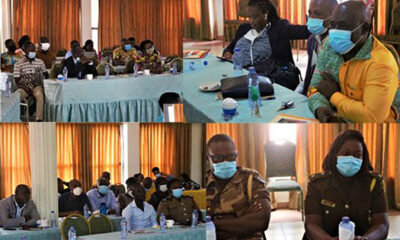
In this vein, the Mental Health Authority and other stakeholders have organized several workshops for Judges and Magistrates across the country on how to suspect mental illness in line of their duties and to refer them to the psychiatric hospitals for assessment.
The Mental Health Advocacy Gh also petitioned parliament to repeal this colonial era-law thus section 57(2) of the criminal offences act, 1960 (Act 29) which has outlived its purpose.
The first deputy speaker of parliament, honorable Joseph Osei-Owusu on the other hand claims no person have been prosecuted in Ghana for attempting to commit suicide and that the call to decriminalize the law is needless. Is the Bekwai MP really serious? Evidence abounds on the internet and the Hon. MP could have sought help by a simple search rather than exposing his ignorance. The evidences are there:
In 2011, a farmer in the Ashanti region was convicted and sentenced to 3 months in prison after he pleaded guilty to attempted suicide. The farmer was said to have claimed that he was not loved by his community and so he decided to kill himself from this world by cutting his throat but was fortunately rescued by a passer-by. The Good Samaritan reported him to the police where he was medically treated in a hospital and subsequently jailed. This was a case of mental illness who needed psychiatric treatment but instead, he was given a jail sentence to worsen his plight. See https://www.modernghana.com/news/329852/suicide-man-jailed.html
In another incidence of such cruelty of the anti-suicide law in Ghana, a 20-year-old male student was in 2005 sentenced to 24 months in prison by a magistrate court for attempted suicide. See https://www.ghanaweb.com/GhanaHomePage/NewsArchive/Student-jailed-for-attempted-suicide-88687.
The comments by these two MPs tell industry players in the mental health sector that a lot more education and awareness creation about mental illness needs to be done to demystify the myth surrounding mental illness.
It is interesting to note that England abolished its laws criminalizing attempted suicide in 1961, only a year after the same law was passed in Ghana, the then Gold Coast, yet Ghana and several of the British former colonies continue to maintain and criminalizes attempted suicide instead of also repealing same.
Countries that have decriminalized attempted suicide including India, Canada, South Africa, Botswana, and Zambia, according to media reports have recorded a significant decrease in the suicide rate.
It is the hope that Ghana will also repeal and decriminalize attempted suicide. Suicide is a psychological or mental problem that needs psychiatric treatment, not imprisonment. Suicide is a call for help.
The writer, Malcolm Ali is a mental health advocate and a psychiatric nurse at Ankaful Psychiatric Hospital.
Email: chibaronet@gmail.com
Discover more from Nursing In Ghana
Subscribe to get the latest posts sent to your email.











There are a lot of things about nursing that your school, lecturers, and books might not have warned you about. Aside from difficult patients, there are also difficult nurses.
Whether it’s stress or just their personalities that make them difficult to deal with, here are a few recommendations you can use to respond better to the situation and their personalities.
#1: The Complainer
What you should do: Avoid taking things seriously.
Your co-worker’s behaviors and actions in the hospital are reflections of what goes on inside her and not of you. She may be acting like that because she’s experiencing some issues at home or she could be just as tired as you are.
If she snaps at you about a small problem, you can just acknowledge what she said. Acknowledgement doesn’t necessarily mean you agree, but it’s a good way of showing your co-worker that you understand her, her point of view and where she’s coming from.
If she starts complaining about her schedule or her patients, acknowledge her feelings and excuse yourself. As simple as that.
#2: Mr. Know-It-All
What you should do: Limit your words.
Talking back and persistently reasoning out can’t do the situation any good. As a matter of fact, the more you talk, the harder the situation becomes to resolve. Instead on focusing on words, you need to be more aware of your actions. Pick your battles to avoid spending unnecessary energy.
Choose your words appropriately when conversing with this coworker. Use direct and concise statements to deliver your point across. You should also set a time limit on how long you’ll be discussing the issue.
“Sometimes, not talking is better than talking. If you keep on supporting your opinion, it just puts the other person in defensive mode and the argument will just go on and on. Problems aren’t solved that way,” a veteran nurse explained.
#3: The Bully
What you should do: Establish boundaries.
Yelling and shouting should not be tolerated, particularly if you are in the presence of your patients. These actions limit the credibility and the authority of your hospital and those who work inside it.
If such an incident happens, simply remove yourself from the situation. Assess the capability of your co-worker to engage in a constructive discussion first before confronting her. Approaching her when she’s still enraged can only lead to more problems.
#4: The Gossip
What you should do: Lessen complaints and gossips.
Constant complaining and gossiping will only make your working environment more negative. Instead of digging a deeper hole, try to be more proactive in finding a solution to the problem.
It’s not necessary that you exert effort on changing the person, but it could help if you can give her the opportunity to express herself, without people talking behind her back. Bullies are often victims of bullying, too. If you’re going to make her feel like she needs to defend herself to everyone in the area, the more likely she’ll snap and spread gossip about everything and everyone.
#5: The Backstabber
What you should do: Exert more effort in knowing your co-worker.
Making your colleague feel isolated and neglected will only make matter worse. Instead of leaving him behind, you can invite him over to lunch with your other colleagues or to your next dinner party.
Creating a sense of belongingness can help lessen his need to backstab anyone. Once “the backstabber” feels that he’s an integral part of the team, the less time he’ll spend in destroying it.
“We usually set an annual date for team building activities. I believe these opportunities allow the nurses in my area to get to know each other well. Since we started this tradition, there were fewer reports of workplace misunderstandings,” a head nurse said.
How do you handle a difficult co-worker? Did some of these insights apply to your situation?
Source: nurseslabs.com
Discover more from Nursing In Ghana
Subscribe to get the latest posts sent to your email.

Discover more from Nursing In Ghana
Subscribe to get the latest posts sent to your email.

Discover more from Nursing In Ghana
Subscribe to get the latest posts sent to your email.

FUNERAL HELD FOR GHANAIAN MIDWIFE, GRACE BENYIN WHO DIED IN IRELAND

GHANA, GRENADA SIGN NURSE RECRUITMENT DEAL – APPLICATIONS OPEN OCT 24-28, 2025

Scotland NHS Recruiting International Nurses

Ministry of Health Postpones Media Engagement on Unpaid Salaries

NMC Issues Strong Warning to Nurses Against Unprofessional Conduct on Social Media

Government slashes 50% off Nursing Training Fees-Press Release

GRNMA Youth Committee launches 2025 International Youth Day celebration

President Mahama promises UHAS expansion to train more health workers
LIST OF ACCREDITED GOVERNMENT NURSING AND MIDWIFERY TRAINING SCHOOLS IN GHANA

NURSING ADMISSION FORMS ON SALE FOR THE 2023/2024 ACADEMIC YEAR

THE NURSES PLEDGE AND THE MIDWIVE’S PRAYER

NURSING TRAINING ADMISSION INTERVIEW QUESTIONS

GHS INTRODUCES TWO NEW BELT COLOURS FOR TWO NEW LEVELS IN THE NURSING AND MIDWIFERY SERVICE

MOH SUSPENDS THE 2021/2022 ACADEMIC CALENDAR FOR NURSING AND MIDWIFERY SCHOOLS

COMMON TYPES OF INTRAVENOUS (IV) FLUIDS AND THEIR USES

LIST OF PRIVATE NURSING AND MIDWIFERY TRAINING SCHOOLS (ACCREDITED)
-
 Nursing News5 years ago
LIST OF ACCREDITED GOVERNMENT NURSING AND MIDWIFERY TRAINING SCHOOLS IN GHANA
-
 Nursing News3 years ago
NURSING ADMISSION FORMS ON SALE FOR THE 2023/2024 ACADEMIC YEAR
-
 Nursing Procedures and Skills5 years ago
THE NURSES PLEDGE AND THE MIDWIVE’S PRAYER
-
 Nursing Procedures and Skills5 years ago
NURSING TRAINING ADMISSION INTERVIEW QUESTIONS
-
 Nursing News4 years ago
GHS INTRODUCES TWO NEW BELT COLOURS FOR TWO NEW LEVELS IN THE NURSING AND MIDWIFERY SERVICE
-
 Nursing News5 years ago
MOH SUSPENDS THE 2021/2022 ACADEMIC CALENDAR FOR NURSING AND MIDWIFERY SCHOOLS
-
 Notes5 years ago
COMMON TYPES OF INTRAVENOUS (IV) FLUIDS AND THEIR USES
-
 Nursing News5 years ago
LIST OF PRIVATE NURSING AND MIDWIFERY TRAINING SCHOOLS (ACCREDITED)